
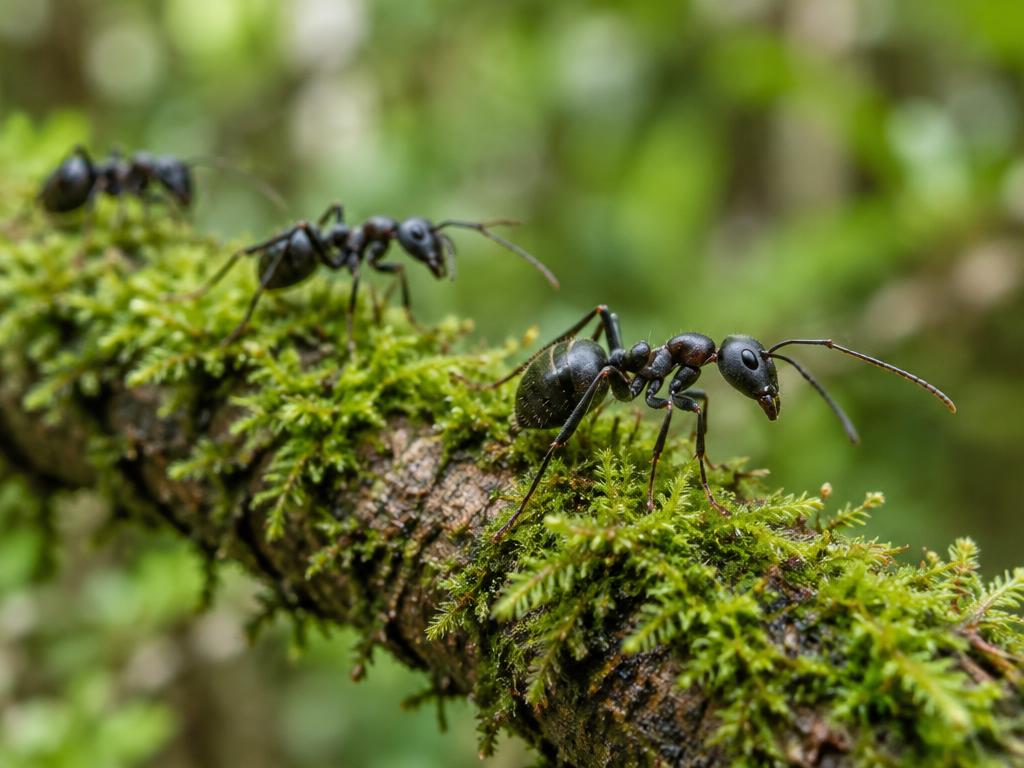
An invisible message trail!
Black garden ants use smells and touch to share messages. They leave scent trails for friends to follow to food.
An AI illustration of a real animal.
For curious grown-ups: facts & sources
Queens and workers have different lifespans. The queen can live for many years. A founding queen normally raises her first workers using her own reserves; feeding notes here are for a colony with workers.
Checked against these references on 11 November 2026. Ask an adult to help with a full care plan. Scientists sometimes update animal names.
Insect · Lasius niger
Black garden ant
A tiny colony with a very big world to build.
Black garden ants are social insects. The queen lays eggs while workers forage, care for the brood and maintain the nest. Watching a colony grow is a lesson in teamwork.
- Lifespan
- Queens can live 10+ years
- Diet
- Sugars and insect protein
- Habitat
- Nest with a foraging area
- Handling
- Hands-off colony
Did you know?
Ants leave chemical scent trails that help nestmates find a food source.
Care, not guesswork
A good life starts here.
An introduction to the essentials. Confirm exact enclosure sizes, temperatures, lighting and feeding schedules with current species-specific guidance and an exotic vet.
The keeper’s rhythm
Little habits. Better wellbeing.
Daily check-in
- Check water availability and escape barriers.
- Observe the colony without shaking or opening the nest.
- Check for mould or workers trapped in liquid food.
Your regular routine
- Offer small portions of sugars and suitable insect protein.
- Remove leftovers from the foraging area.
- Plan species-specific seasonal rest and expand only when needed.
Know when to ask for help
Sudden worker deaths, mould or a failing water reservoir call for prompt review of the nest conditions and specialist advice.
Is this animal right for you?
Can you manage escape prevention, seasonal care and a colony that may grow for many years?
Read the care essentials