A hiss means “give me space”
Snakes can hiss when they feel threatened. We have not found a checked recording of this kind of snake to share yet.
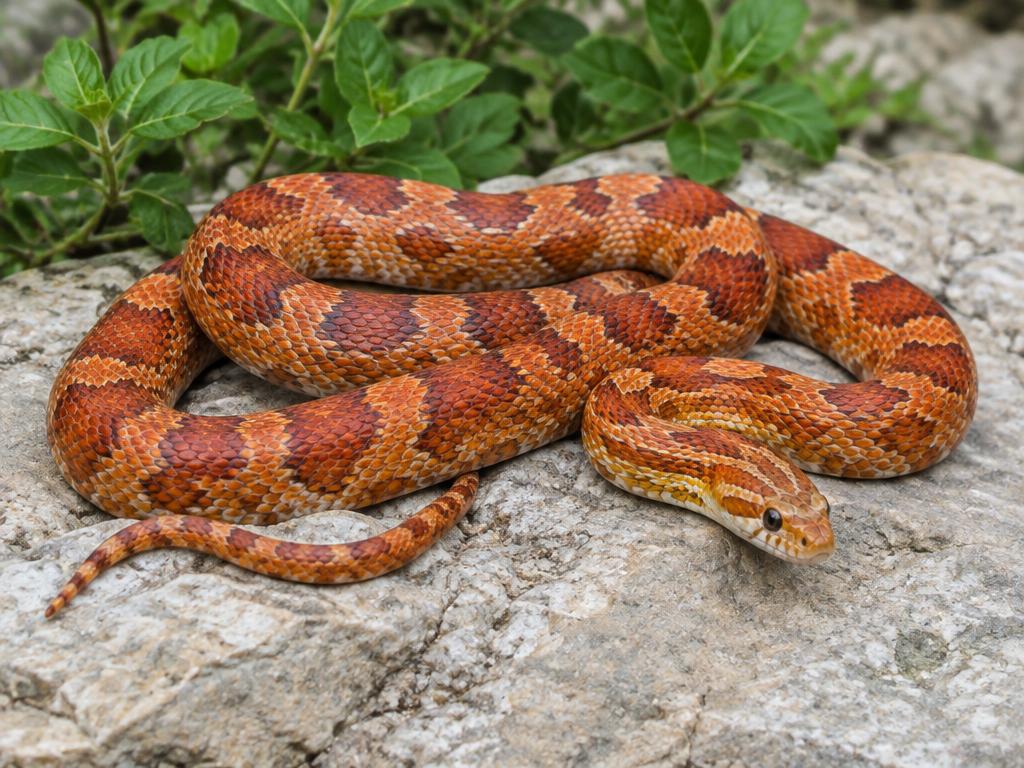
An AI illustration of a real animal.
For curious grown-ups: facts & sources
Corn snakes are non-venomous constrictors. Adult snakes need room to stretch fully, not a tiny tank.
Checked against these references on 11 November 2026. Ask an adult to help with a full care plan. Scientists sometimes update animal names.
Reptile · Pantherophis guttatus
Corn snake
Quiet, inquisitive and beautifully misunderstood.
Corn snakes are non-venomous snakes from North America. They explore using their tongue to gather scent information and enjoy hides, climbing opportunities and space to stretch out.
- Lifespan
- Around 10 to 15 years; some live longer
- Diet
- Thawed whole rodents
- Habitat
- Secure, spacious vivarium
- Handling
- Gentle, supported handling
Did you know?
A snake’s tongue collects scent particles and brings them to a special organ in the roof of its mouth.
Care, not guesswork
A good life starts here.
An introduction to the essentials. Confirm exact enclosure sizes, temperatures, lighting and feeding schedules with current species-specific guidance and an exotic vet.
The keeper’s rhythm
Little habits. Better wellbeing.
Daily check-in
- Check the thermostat and warm and cool readings.
- Refresh drinking water and check enclosure locks.
- Observe movement and check for waste.
Your regular routine
- Record feeding, weight trends and sheds.
- Clean soiled substrate and inspect hides.
- Follow an age- and body-condition-appropriate feeding plan.
Know when to ask for help
Wheezing, mouth breathing, injuries or retained shed around the eyes or tail should be discussed with an exotic vet.
Is this animal right for you?
Are you comfortable storing frozen rodents and committing to care for potentially two decades?
Read the care essentials