
Every frog sounds different
This frog has its own voice. We have not found a checked recording we can share here yet, so you will not hear a different frog by mistake.
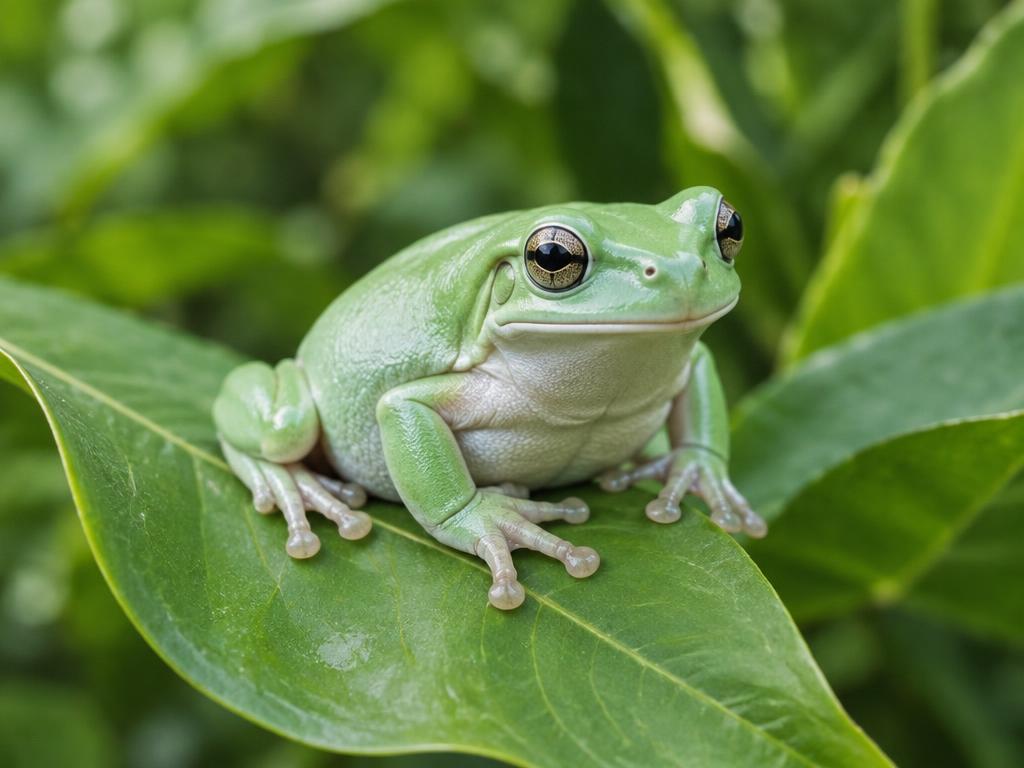
An AI illustration of a real animal.
For curious grown-ups: facts & sources
The current museum taxonomy is Pelodryas caerulea. Older sources use Litoria caerulea or Ranoidea caerulea for the same species. It is native to Australia and New Guinea.
- Smithsonian National Zoo
- White’s Tree Frog Care | Tree of Life Exotic Pet Medical Center
- American Museum of Natural History: current name
Checked against these references on 11 November 2026. Ask an adult to help with a full care plan. Scientists sometimes update animal names.
Amphibian · Pelodryas caerulea
White’s tree frog
Big eyes. Sticky toes. A whole lot of character.
These nocturnal tree frogs are native to Australia and New Guinea and spend much of their time climbing and resting on branches. Their calm appearance hides a surprisingly enthusiastic insect hunter.
- Lifespan
- Often 10 to 15+ years
- Diet
- Live insects
- Habitat
- Tall, planted enclosure
- Handling
- Look, don’t handle
Did you know?
Frogs absorb water through their skin rather than drinking like we do.
Care, not guesswork
A good life starts here.
An introduction to the essentials. Confirm exact enclosure sizes, temperatures, lighting and feeding schedules with current species-specific guidance and an exotic vet.
The keeper’s rhythm
Little habits. Better wellbeing.
Daily check-in
- Check temperature and humidity against your species plan.
- Replace the shallow dish with clean, dechlorinated water.
- Look for normal posture, movement and appetite.
Your regular routine
- Spot-clean waste and remove uneaten feeders.
- Follow an age-appropriate feeding and supplement schedule.
- Inspect branches, foliage and equipment for damage.
Know when to ask for help
Unusual redness, sores, persistent appetite loss or difficulty moving need advice from an exotic vet.
Is this animal right for you?
Can you provide live insect food and monitor temperature, humidity and water quality every day?
Read the care essentials